
 +90 533 923 09 63

Fly and Dive in Ölüdeniz: How to Protect Your Ears

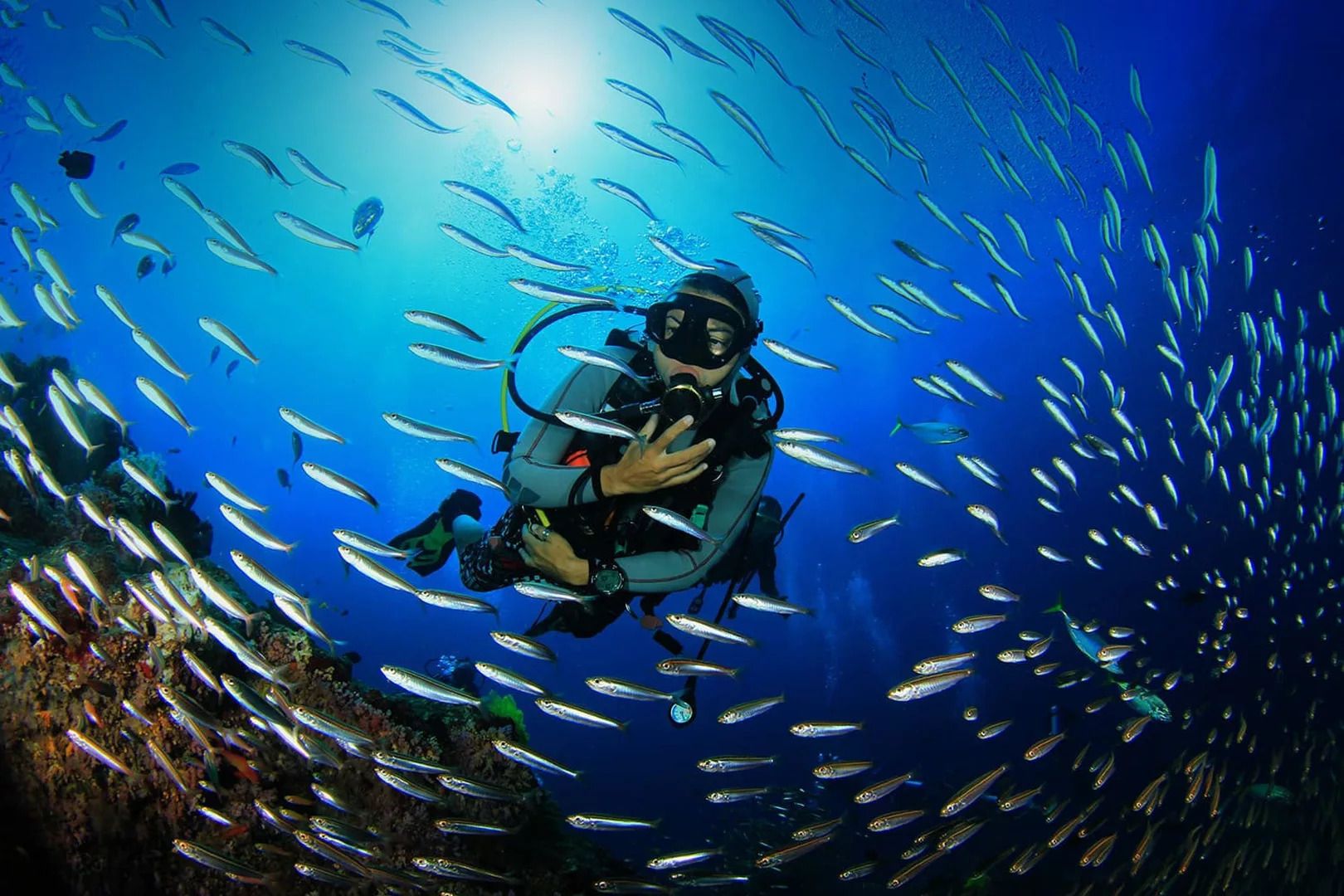
Flying over the Blue Lagoon in the morning and diving in it after lunch is one of the best days you can have in Ölüdeniz. Both activities change the air pressure around you, and your ears feel it first. This guide explains the one rule you must not break, fly first, dive after, and how to keep your ears comfortable in the air and underwater.
This is general safety information, not medical advice. If you have an ear, sinus, heart or lung condition, ask your doctor before you book.
The short answer: fly first, dive after
- Paragliding then diving the same day is fine. This is how our Fly & Dive day works: a morning flight, then an afternoon try dive.
- Diving then paragliding the same day is not. After a dive your body holds extra nitrogen, and going up a mountain afterwards raises the risk of decompression sickness.
- Your ears need gentle, early equalising on the flight down and on the dive down. Never force it.
- Skip the dive if you have a cold, blocked sinuses or an ear infection.
Why the order matters
When you breathe compressed air underwater, your body absorbs extra nitrogen. It leaves slowly over the following hours. If you go somewhere with lower air pressure too soon, that nitrogen can form bubbles in the body. This is decompression sickness (DCS), also called "the bends".
That is why divers are told to wait before taking a plane. Common guidance (for example from Divers Alert Network) is at least 12 hours after a single dive and at least 18 hours after several dives or several days of diving. Driving up a mountain counts too. Babadağ's launches are at 1,200 to 1,965 m. At the top the air pressure is about 20% lower than at the beach, which is similar to a plane cabin.
The other way round is not a problem. A 20 to 45 minute flight does not load your body with nitrogen, so you can dive the same afternoon. If you are flying home after your holiday, keep your last dive at least 18 to 24 hours before the flight.
What your ears feel on a paragliding flight
The drive up Babadağ takes about 30 to 35 minutes. As the air pressure drops, the air inside your middle ear expands and usually escapes on its own. You may feel a small "pop". The descent is the part people notice: the pressure rises again and pushes your eardrums inward until you equalise.
- Swallow, yawn or move your jaw during the flight. Chewing gum helps.
- If your ears feel full, pinch your nose and blow very gently (the Valsalva manoeuvre). Stop if it hurts.
- Acrobatics and spirals bring you down very fast. If your ears are sensitive or you have a slight cold, skip them. Tell your pilot, and they will descend slowly and smoothly.
- Ears that stay a little "full" for an hour after landing are normal. Pain is not.
What your ears feel on a dive
Underwater the pressure changes much faster. At 10 m it is already double the pressure at the surface, and the biggest change happens in the first few metres. Your instructor will teach you to equalise before you go down. The rules are simple:
- Equalise early and often. Start at the surface and repeat every metre or so, before you feel any pressure.
- Be gentle. Pinch your nose and blow softly, or swallow and move your jaw. Never blow hard.
- Go down feet first and slowly, holding the line or staying next to your instructor.
- If it hurts, stop. Signal your instructor, go up a little, equalise again, then continue. Pushing through pain can tear the eardrum.
- Come up slowly. Air in your ears should escape by itself. If one ear feels blocked on the way up, stop, tell your instructor and go up even more slowly.
Beginner try dives are kept shallow (usually within 12 m) and always with an instructor next to you.
When to skip the dive (or the flight)
- A cold, flu, blocked nose or bad hay fever. If you cannot breathe easily through both nostrils, you will struggle to equalise.
- An ear infection, ear pain or discharge, or a recent burst eardrum.
- Ear surgery or grommets (ear tubes), unless a doctor has cleared you for diving.
- Alcohol the night before or on the day. It dehydrates you and affects both activities.
- Pregnancy. Diving is not recommended, and tandem paragliding is not suitable either.
Do not take decongestants just to "get through" a dive. They can wear off underwater, and the ear then blocks on the way up (a reverse block), which is painful and can cause injury. If you are not well, we will move your dive to another day.
After the day: aftercare and warning signs
- Tilt your head to drain water from your ears and dry them gently with a towel. Do not use cotton buds.
- Drink water and rest. Paragliding and diving in one day is a lot of fresh air.
- Some fullness or crackling in the ears for a few hours is common.
Get medical help if you have sharp ear pain, blood from the ear, reduced hearing, ringing, dizziness or nausea. After a dive, also look out for joint pain, numbness, tingling, unusual tiredness or breathing problems. Treat these as possible decompression sickness: call 112 and tell them you have been diving.
How our Fly & Dive day works
We pick you up at your hotel in the morning and drive you up Babadağ for a tandem paragliding flight with a licensed pilot. You land on Belcekız beach in Ölüdeniz. In the afternoon you join a scuba try dive with an instructor, with all equipment provided. The combo costs 9,999 TL per person, with insurance, the Babadağ entry fee and hotel transfer included. Photos and videos are not included. We always plan the flight first and the dive second.
Frequently asked questions
Can I go paragliding and scuba diving on the same day?
Yes, if you fly first and dive afterwards. Do not drive up Babadağ or go paragliding after a dive on the same day.
How long should I wait after diving before paragliding?
Treat it like taking a plane: wait at least 12 hours after a single dive and at least 18 hours after several dives or several days of diving. Babadağ launches are up to 1,965 m, so the drive up counts as going to altitude.
Why do my ears hurt when the paraglider comes down?
Air pressure rises as you descend and pushes your eardrums inward until you equalise. Swallow, yawn or pinch your nose and blow gently. Tell your pilot: they can descend more slowly and skip the acrobatics.
Can I dive with a cold?
It is better not to. A blocked nose makes equalising hard and can injure your ear, including a painful reverse block on the way up. Move the dive to another day.
Is the Fly & Dive combo suitable for beginners?
Yes. You do not need a licence for either activity. A licensed tandem pilot flies the glider, and a dive instructor stays with you during a shallow try dive. You fill in a short medical form before the dive.
Related guides
- Who can fly: age, weight and health limits
- Is Ölüdeniz paragliding safe?
- What to wear for paragliding
- Scuba diving in Fethiye
See Fly & Dive prices Ask on WhatsApp
Last updated: 23 November 2026
