 +90 533 923 09 63
 flyspotairsports@gmail.com

Is Ölüdeniz Paragliding Safe? What the Rules Actually Require

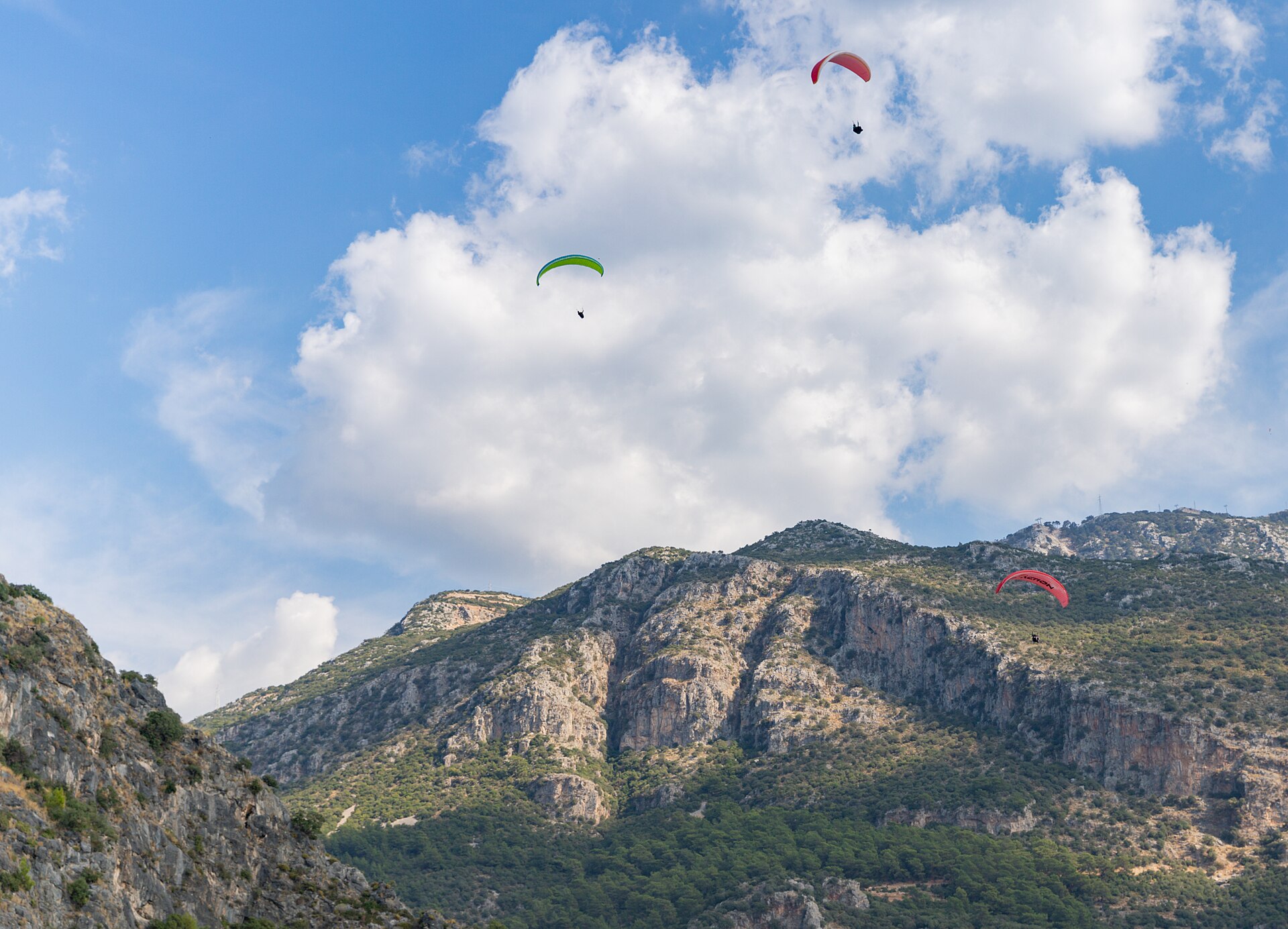
Tandem paragliding in Ölüdeniz is regulated. A commercial pilot must hold a T2 tandem certificate, fly for a permitted agency, carry passenger insurance and a reserve parachute, and make a weather call before every launch. Accidents are rare, but the sport is not risk-free. The pilot's decision to cancel is the main safety system.
The short answer
Ölüdeniz is one of the most heavily flown tandem sites in the world. That volume brings experience, established procedures and a local inspection system. It also means the site is busy, and busy airspace has its own risks.
With a licensed pilot, a maintained wing, a working reserve and a sensible weather decision, a tandem flight has a strong safety record. The risk rises when an operator pushes marginal weather, skips paperwork, or sells a flight without the right licence and insurance. Your job as a passenger is to choose the operator, not to manage the flight.
Who regulates tandem flights in Turkey?
Paragliding in Turkey sits under the Turkish Air Sports Federation (THSF), with the Fethiye launch site also covered by a local flight directive and a slot system. The key points for a passenger:
- A commercial tandem pilot holds a T2 certificate. T1 is a tandem level that does not allow paying passengers.
- The pilot must fly for a travel agency with a tourism sports permit for the season. Pilots cannot sell flights on their own.
- Every commercial flight needs personal accident or seat insurance and third-party liability insurance.
- Every flight gets a flight card containing the risk acceptance form, flight information and passenger briefing.
- A reserve parachute must be carried on every flight.
- A pilot new to commercial flying at the Fethiye site must show a record of at least 250 flights at a slot-controlled launch site, under a 2026 local board decision.
These are site rules, not marketing claims. Ask to see the paperwork.
What to check before you pay
You do not need to inspect the wing yourself. You do need to see that the operator is licensed and insured.
| Check | What to ask | Why it matters |
|---|---|---|
| Pilot certificate | "May I see your T2 certificate?" | Confirms the pilot can carry paying passengers |
| Agency permit | "May I see the agency's tourism sports permit?" | Confirms the company can legally sell flights at Babadağ |
| Insurance | "Am I covered as a passenger?" | Confirms the policy covers you, not only the pilot |
| Flight card | "Is my flight card ready?" | The card is required to enter the launch area |
| Helmet | "Does this helmet fit properly?" | Passenger helmet is required at takeoff and landing |
| Reserve parachute | "Where is the reserve, and has it been repacked?" | The reserve is the backup if the main wing fails |
| Briefing | "Can you explain the takeoff and landing again?" | You need to understand the run and the landing posture |
| Price board | "What is the total, including media and transfer?" | Avoids surprises after the flight |
A professional operator will not be offended by these questions. If any answer is vague, walk away.
What the pilot checks on the day
The launch decision is not a formality. Before your flight, the pilot and the site controllers look at:
- Wind speed and direction at the launch and at the landing beach
- Gust spread and changes in the last hour
- Cloud base, visibility and rain risk
- Thermal strength and turbulence
- Traffic in the landing area
Babadağ has several slopes for a reason. The 1,700 m south slope works in the prevailing south and southwest wind. The 1,800 m north slope is used when the wind turns north. The 1,900 m Patara and Kuzey slopes are used in specific wind directions. If the wind is wrong for the day's slope, the flight should move or cancel.
At the site, a flag system can close flying outright. Red means no flying. Green leaves the decision to the agency and pilot. A pilot who cancels on a green day because the air is gusty is making the right call.
Why cancellations are a good sign
Weather cancellations are annoying. They are also the clearest signal that the operator is not trading safety for revenue.
A flight scrubbed for wind is a pilot reading the mountain correctly. A company that flies in marginal conditions to keep your money is the one to avoid. Build a spare day into your itinerary if the flight is the main reason for your trip, and confirm the cancellation policy before you pay.
How risky is tandem paragliding, honestly?
Any air sport carries risk. In a tandem flight the passenger is not flying, so the decisions rest with the pilot's experience and the day's conditions rather than your own skill. That removes one common source of error, but it does not remove risk.
Ölüdeniz has seen fatal accidents over the years, including among solo pilots. Independent local guides point to weather pressure and corner-cutting on equipment or licensing as recurring factors. No operator should promise that nothing can go wrong. A good operator explains the risks, shows the paperwork and cancels when conditions are wrong.
The most useful risk reduction is not a statistic. It is choosing a licensed operator with a visible licence, current insurance and a reputation that survives bad weather.
Questions to ask any Ölüdeniz operator
- What tandem certificate does my pilot hold, and can I see it?
- Is the agency permitted to sell flights at Babadağ this season?
- Does the insurance cover me as a passenger?
- Is the reserve parachute packed and in date?
- Which launch are we using today, and why?
- What wind speed or direction would make you cancel?
- What is the written policy if weather stops the flight?
- Are photos and video included, and who owns the files?
If the answers are clear, you are probably dealing with a professional. If the sales pitch is louder than the answers, keep walking.
Our credentials
Our pilots fly under the THSF/FAI tandem system described above. Passengers are insured with Quick Sigorta, with cover up to US$1,000,000. Ask us on WhatsApp if you want to see the policy before you fly.
Frequently asked questions
Is Ölüdeniz paragliding safe?
With a licensed T2 pilot, current insurance, a reserve parachute and a sensible weather decision, tandem flying has a strong safety record. It is still an air sport, and accidents can happen. Choose a licensed operator and accept cancellations.
How many accidents happen in Ölüdeniz?
There is no reliable public count in this research. Fatal accidents have occurred at the site over the years, including solo flights. Treat any operator that claims zero risk with suspicion.
Do I need a licence to fly tandem?
No. The pilot holds the licence. You need to be able to jog a few steps and follow the landing instruction.
What licence should the pilot have?
A T2 commercial tandem certificate under the THSF system. A P2, P3, P4 or P5 solo licence does not authorise carrying paying passengers.
Is it safe to fly in the afternoon?
Afternoon thermals can make the air bumpier, but the pilot decides whether it is safe. If you are nervous or prone to motion sickness, book a morning slot.
What happens if the wind is too strong?
The flight should be moved to a more suitable slope, delayed or cancelled. With Flyspot you get a 100% refund or a free reschedule.
Check before you fly
WhatsApp +90 533 923 09 63 and ask for the pilot's T2 certificate, the agency permit and the insurance details before you pay. We would rather answer those questions than have you wonder at the launch.
Related guides
- Ölüdeniz paragliding guide — complete guide
- Flying with a fear of heights — anxiety and sensation
- What happens if weather cancels — weather cancellation policy
- Who should not fly — health and eligibility
- Why the pilot changes launch — how the launch is chosen
Tandem Paragliding Ölüdeniz Ask on WhatsApp
Last updated: 4 November 2026
