 +90 533 923 09 63
 flyspotairsports@gmail.com

Paragliding with a Fear of Heights: What It Actually Feels Like

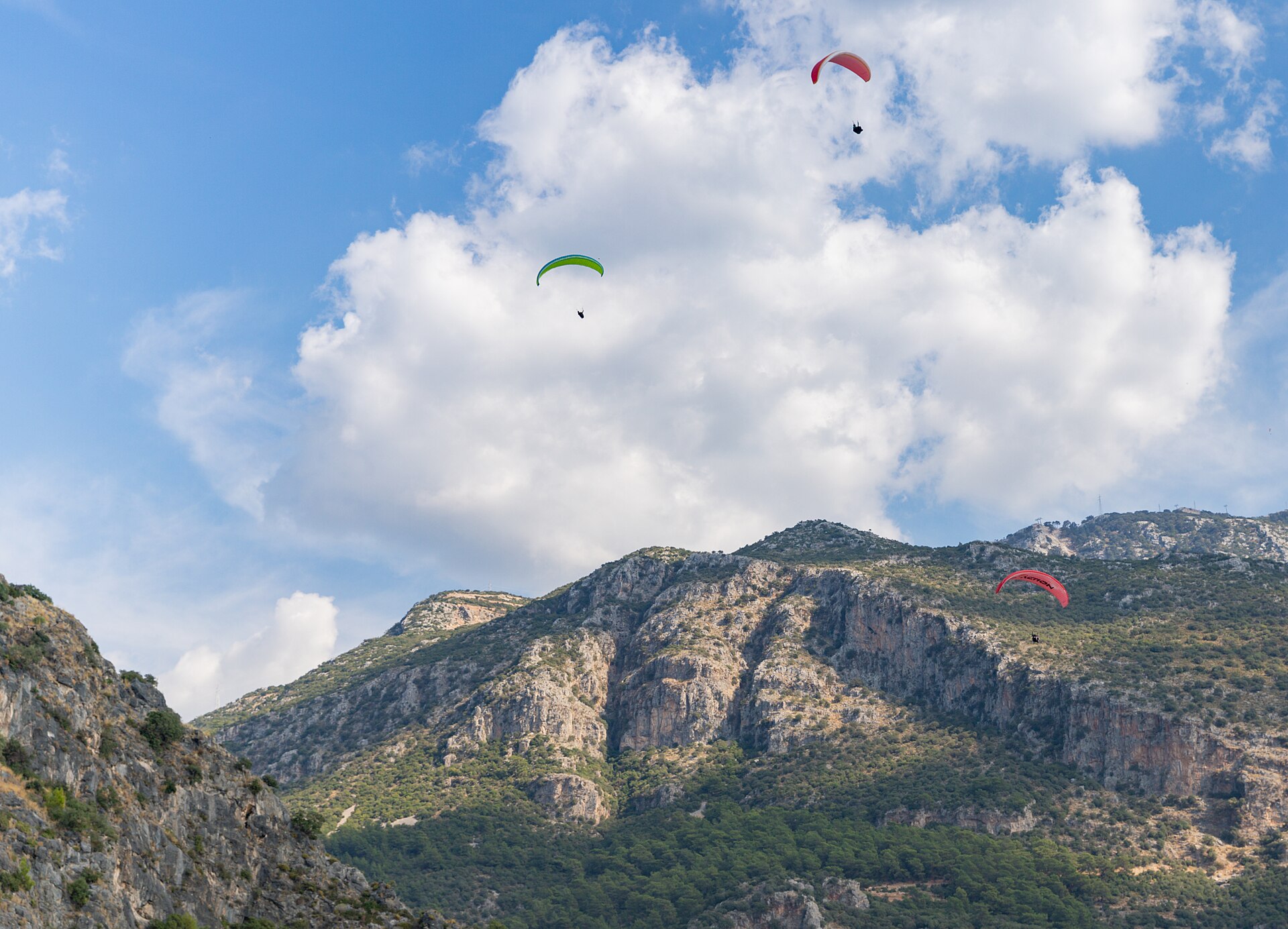
You can paraglide with a fear of heights. Most people feel nervous at the launch and calm once airborne, because there is no ledge under their feet and no freefall. Tell the pilot before takeoff, ask for a smooth flight, and look at the horizon rather than straight down.
Why the fear feels different in the air
A fear of heights is usually triggered by standing on something fixed and looking down: a balcony, a ladder, a cliff edge. Your brain senses a drop and braces for a fall.
In a paraglider, there is no fixed platform. You are sitting in a harness with your feet hanging free, and the ground is far below rather than directly under you. Many people who dislike balconies feel surprisingly comfortable in the air. Others feel fine at takeoff and uneasy once the wing turns. Both reactions are normal.
The pilot is behind you, clipped to the same harness, controlling the wing. You are not balancing, steering or holding on.
What takeoff actually feels like
- You stand on a grassy or composite slope with the wing laid out behind you.
- The pilot clips you into the harness and checks the buckles, helmet and reserve.
- The pilot lifts the wing above your heads. It inflates in the wind.
- The pilot says "walk" or "run". You take a few steps forward.
- The wing lifts you gently off your feet. You keep moving until the pilot says to sit.
- You settle into the harness. The flight has started.
There is no jump and no countdown. The launch is a short run, and the wing does the lifting. If you hesitate or sit back, the launch gets harder, so listen to the pilot's voice and keep moving until told otherwise.
What the flight feels like
Once you are seated, the motion is closer to a swing than a roller coaster. The wing glides forward and turns in wide arcs. The wind is steady. The noise is mostly wind and the pilot's voice.
If the pilot uses thermals, you may circle upward. That can feel like a lift in an elevator. If the pilot does a spiral or wingover, you will feel G-force and a drop in your stomach. Those manoeuvres are optional. A standard scenic flight does not include them.
Motion sickness can happen even to passengers who are not afraid. If you are prone to it, ask for a smooth flight, look at the horizon, and avoid a heavy meal before takeoff.
How to prepare
- Book the first morning slot. The air is calmer before the thermals build.
- Eat a light meal one to two hours before. Do not fly on an empty stomach or after a feast.
- Limit coffee and energy drinks. Caffeine can amplify anxiety.
- Tell the pilot exactly what worries you. Say "I am nervous about the height" or "I do not want any acrobatics". Specific concerns are easier to answer than a general request for reassurance.
- Ask to repeat the takeoff instructions. Knowing the word the pilot will use helps.
- Look at the horizon, not your feet. The horizon is stable; the ground moving under you is what makes the brain lurch.
- Breathe out longer than you breathe in. A slow exhale calms the body faster than a deep gulp of air.
- Give yourself permission to land early. If you are not enjoying it, tell the pilot. A good pilot can cut the flight short and land safely.
What not to do
Do not hide the fear until you are clipped in. The pilot can fly differently if they know: smoother turns, less time over the water, a straighter approach to landing.
Do not spend the night before watching crash compilations or extreme acro videos. They show a different activity from a standard tandem flight. Watch a normal passenger video instead, ideally from the same launch.
Do not book an acrobatic flight to "get it over with". A gentle flight is the better first step. You can always come back for the spins.
Who should not fly
A fear of heights is not a medical contraindication. An untreated panic disorder is different. If you have panic attacks, severe anxiety or a diagnosed phobia that has not been treated, talk to your doctor before booking. A tandem flight is not exposure therapy, and a pilot is not a therapist.
The same applies to heart conditions, uncontrolled epilepsy, pregnancy and recent surgery. Tell the operator before you pay.
Our approach
We brief nervous passengers before the flight, keep the turns gentle unless you ask for more, and stay in radio contact with the ground crew. If you want to stop, tell the pilot. Ask us about the early-landing policy when you book.
Frequently asked questions
Can you paraglide if you are scared of heights?
Yes. Many passengers with a fear of heights fly comfortably because there is no ledge and no freefall. Tell the pilot, book a calm morning slot and ask for a smooth flight.
Does takeoff feel like jumping off a cliff?
No. The wing inflates above you and lifts you off the ground after a few running steps. There is no jump and no freefall.
Will I feel dizzy or sick?
Some people feel motion sickness from the turns or thermals. Looking at the horizon, flying in the morning and avoiding a heavy meal help. Tell the pilot early.
Can I ask the pilot to stop?
Yes. Tell the pilot you want to land. A good pilot will adjust the flight or bring you down as soon as it is safe.
Is it normal to cry or panic?
Nervousness is normal. Panic is different. If you have an untreated panic disorder, speak to a doctor before booking.
What if I freeze at takeoff?
Tell the pilot. They can pause, repeat the instructions and decide whether to continue. Never start the run and then sit down; keep moving until the wing lifts you.
Talk to us before you book
WhatsApp +90 533 923 09 63 and tell us that you are nervous. We will suggest the calmest slot, explain the launch step by step, and match you with a pilot who is good with anxious passengers.
Related guides
- Ölüdeniz paragliding guide — complete guide
- How safe tandem flying is — licensing and risk
- Calmest time of day — morning vs afternoon air
- Health conditions that stop a flight — medical conditions
- Book a morning slot — choosing a slot
Tandem Paragliding Ölüdeniz Ask on WhatsApp
Last updated: 4 November 2026
